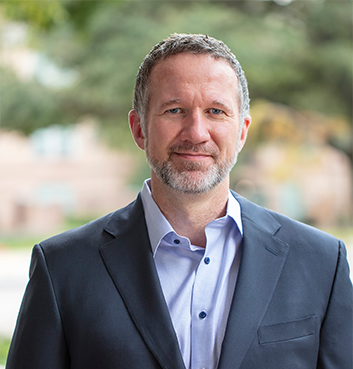
 As a leading expert in the dynamic world of energy trading and risk management (ETRM), Tommy Miles, MRE Consulting’s ETRM Practice Co-Lead, brings over two decades of experience to the table. His passion for creating efficient, value-driven solutions has made him an invaluable asset to the company and our clients. In this Q&A, Tommy shares insights from his journey, his perspective on the key challenges facing the energy industry today, and how MRE’s recent acquisition by Infosys will expand its global capabilities.
Can you tell us a little bit about your background before coming to MRE Consulting?
I started my career at a non profit, handling all the accounting, bookkeeping, and payroll. I then moved to Ferrellgas for my first corporate accounting job, where I focused on tax and regulatory filings before shifting to revenue accounting. It was there that I discovered my passion for development. I grew tired of the repetitive nature of my monthly tasks and began automating them using Excel macros. This led to me building small applications in Excel, and I realized I loved building solutions that made things more efficient. MRE and Ferrell had a long standing relationship, which allowed me to get to know the MRE team. At times I spent more time discussing technology with the MRE team than I did working on journal entries. This only increased my interest in MRE and making a change in my career. Seeing an opportunity to transition from accounting to development, I made the leap to MRE about 21 years ago.
What was the deciding factor in choosing MRE?
The people were the deciding factor. The MRE team that supported Ferrell at the time including Dennis Bilbe, Scott Finke, Cat Theriot, Andrean Kosasih, and Eric Griffin were in the Ferrell offices. I got to know them well and saw how much they enjoyed what they were doing and how MRE valued them and their work for the client. It seemed like they were always tackling challenging new projects. The opportunity to do something I enjoyed with people I liked, at a company that appreciated my contributions, was a “no brainer” for me.
Tell us about your journey at MRE, including your past and current roles.
My journey began as a developer, with my full time job being to write code. In my early years, I worked with Keith Farris and Matt Gannon on a custom .NET solution for a client. I then spent several years writing code in Openlink Endur for various clients. As I gained more knowledge about technology and the industry, I moved into a technical architect role, where I outlined technology components, development needs, and data solutions. Eventually, I became a solution architect, which involves combining my knowledge of our clients’ business needs with my understanding of how technology works to provide solutions that create value through efficiency and margin improvements. Today, in addition to serving our clients, I co-lead our energy practice with Todd Perry. Our energy practice handles the majority of our ETRM work in addition to business and technology needs in the ecosystem around ETRM.
What advice would you give to a developer looking to grow their career or get into the energy space?
First, master the basics. You need to be able to listen to a problem, break it down, and provide a solution that is supportable, sustainable, and flexible for you and others to understand later. If you want to get into the energy or ETRM space, you must be ready for a significant commitment. Unlike products like Salesforce, ETRM products are not well documented, and there aren’t many quick training platforms available. You need to be willing to do the work and leverage the knowledge of others to get up to speed. Stay proactive in owning your career and continuously expanding your understanding of the industry and what drives business needs.
What are three major challenges you believe energy companies are facing today?
First, the focus on green energy and decarbonization is forcing industries built on carbon footprints to rethink their business models. This transition will continue to drive innovation and create new business needs. Second, the exponential evolution of AI is something the energy industry is just beginning to understand and leverage. While AI offers the opportunity for companies to make a leap forward in their maturity, it requires a strong foundation of processes, data, and systems that many companies struggle with. Finally, the “graying of the industry” is a major concern. A lot of experienced professionals are nearing retirement, and there isn’t a large enough influx of new talent to absorb the knowledge and experience that may be lost. We need to figure out how to transfer this knowledge to new talent or use AI to capture it.
With the acquisition by Infosys, how do you see this changing MRE’s capabilities?
What I don’t see changing is who we are as a firm, our capabilities, and how we deliver to clients. Our culture and the way we value our people will remain the same. What is changing is that we can now take our capabilities to a much larger community. We’ve been limited to North American companies for most of our work, but with Infosys, we can now take our knowledge and experience global and solve larger problems. Additionally, we can leverage Infosys’s expertise in AI, such as agentic AI, to help our energy clients move forward faster in that area.
Is there anything you want to underscore for energy companies as they think about how to leverage an ETRM?
In many organizations, I’ve observed a common trend: the ETRM system either becomes a monolithic solution that is difficult and expensive to upgrade and maintain, or it’s treated as a component of a larger ecosystem. The latter is becoming the leading practice in the last five to ten years. I want to emphasize this: think about how the ETRM fits within your business processes, data needs, and overall strategy. Don’t make it the center of the universe. Instead, protect that component of your ecosystem by leveraging other tools and technologies to fill the gaps. This ensures you’re focused on getting your processes and data in a place where they can support your objectives, especially as we look to leverage AI. To me, protecting your ETRM means not using it for everything. Figure out what it’s good at and use other things to fill in the blanks.
Do you have a recent client example of that type of ecosystem?
Yes, we have quite a few recent projects. We recently worked with a retail gas organization with many customers across most of North America. We leveraged Salesforce for their counterparty, contract management, quoting, and contract execution activity and Openlink Endur for trading, logistics, risk management, settlement, and accounting. Salesforce is much better suited for counterparty and contract lifecycle management than Endur and using a multiple system solution provided flexibility in how we leveraged each to fit the business needs.
More recently, I’m working with a large multinational oil and gas company that is focused on a data-centric architecture. They’re prioritizing data governance and ownership, ensuring their integration solutions are built to easily decouple components like the ETRM, CRM, or ERP systems. This approach allows for greater flexibility as components are moved in or out over time.
What is your favorite project you’ve worked on?
It’s hard to pick just one, but my first Openlink Endur implementation stands out. It was a challenging project where I served as both the solution architect and program manager. It really stretched me beyond my technical work and taught me a lot that became a foundation for what I was able to do later in my career. I also developed many friendships with both the MRE team and the client during that project that have lasted for decades.
What do you enjoy most about working at MRE, and what do you think is unique about the company?
What I enjoy most are the people I work with, many of whom I’ve developed friendships with. What I think is unique about MRE is that we are a “people company”. Our people are our greatest asset, and I have always felt that the leadership at MRE values the work I provide and the value I bring to the firm and its clients. I also enjoy solving problems. It’s motivating to take a complex challenge and create a solution that provides value. While it’s contributed to many of my gray hairs due to the stress, I would not hesitate to take on a new challenge when there’s an opportunity.
Do you have top memorable project moment?
It’s a little embarrassing for me, but I was running a project once, and we were deep in the middle of building a solution under a lot of stress. One of the client resources scheduled a half-hour meeting with the entire project team. I was trying to protect us from being distracted, so I raised all these concerns and challenges about it. We went ahead and had the meeting, and she came in with a box of candy from a candy company that was one of their customers. She dumped it out on the table and said, “We just wanted to say thank you to the team for all the hard work that you’re doing.” I wanted to crawl into my skin because I felt like such a jerk for being difficult. It was one of those really sweet personal moments in a project where you realize that we’re all just people and we’re just doing our jobs. Sometimes we need to remember that the human element is just as important as the work we’re doing. It’s always been memorable to me.
What do you like to do in your free time when you’re not busy with work?
I’m a big believer in balance. When I work hard, I need to either play or rest, because if you don’t have balance in enjoying things outside of work, you can get burned out really quickly. So, you’ll often find me just shutting my brain off and enjoying some mind-numbing entertainment on TV or movies. I also have a habit of playing poker, so I enjoy a good game. For me, it’s about finding things that can give me the relaxation to offset the work. I also like to exercise; I enjoy getting out and going for a jog because that gets your brain thinking, and it’s a good way to enjoy things outside.
What is a fun fact about you that people might not know?
A lot of people might not know that I spent about 10 years as a DJ in bars and clubs around Houston. It was always surprising when a client or an MRE person would show up and look at the DJ booth and go, wait, is that Tommy? But I gave that up several years ago. I keep music as a hobby, whether it’s listening or cataloging my vast collection of MP3s.
Another fun fact is that my first jobs were cleaning toilets at a high school and elementary school. After that, I worked for four years at the front desk of a childcare facility. I often joke that having to tell a parent their child was bitten for the third time is scarier than any boardroom meeting. These experiences were a big part of my foundation and helped me in my career in consulting.