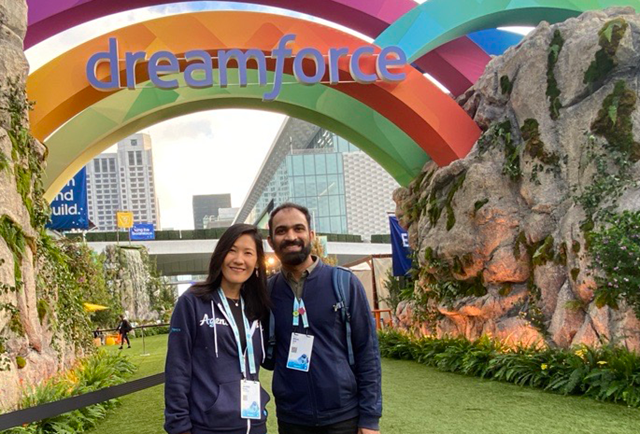
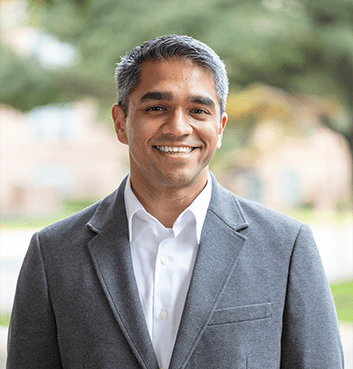
 We recently sat down with Subi Philip, MRE Consulting’s Salesforce Practice Lead, to learn more about his journey, his role, and the exciting future of our Salesforce practice, especially with the recent merger with Infosys.
Q: Can you tell us a bit about your background before coming to MRE?
Right before I joined MRE, I was a Customer Success Director at Salesforce. In that role, I worked with C-suite executives and key stakeholders at strategic accounts to help them understand the value of the Salesforce platform and guide them through their digital transformation programs. Before that, I worked at other SIS consulting companies as a Salesforce practice lead, solution architect, and technical architect.
Q: How did you come to be at MRE?
That’s a great question. MRE had secured a very large program where they were leveraging our commodity trading ETRM practice. This project also included a Salesforce component. Initially, MRE had partnered with another consulting firm to deliver the Salesforce aspects of the project. However, just as the project was about to start, that consulting company was acquired by the auditing firm for our client. This meant they could no longer deliver on the project due to a conflict of interest.
Bill Bucy, from MRE, made a strong argument. Instead of seeking another Salesforce consulting partner, he proposed building an internal Salesforce practice. He started looking for a candidate to lead this new practice and the associated work. My name came up a few times when he spoke to people in the market. He reached out to me, we met for coffee and breakfast, and he convinced me to come on board. I joined to deliver that initial project, which we successfully did, and we continue to support it today. I’ve been here at MRE for about eight years now.
Q: What was Bill’s winning argument that convinced you to join MRE?
I think it was the opportunity to grow the practice from scratch – the chance to really start something new. That was a significant and attractive challenge. Also, the ability to bring in people as needed, expand our capabilities, and truly control the direction of our Salesforce practice was very appealing.

Q: Tell us a bit about your role now as the head of the Salesforce practice.
Like many people at MRE, I wear many hats. I’m responsible for the strategy of the practice, focusing on where we want to grow, the skills we need, and our sales pursuits. I’m also responsible for growing the practice itself, which includes identifying and hiring new talent and determining what skills our team needs to learn to align with our go-to-market strategy.
I’m heavily involved in client engagement, ensuring our current projects are successful and our stakeholders are satisfied. Also, I do a lot of technical solutioning, business process design, and even some hands-on development from time to time, though I try to delegate that as quickly as possible.
Q: How do you expect this acquisition [by Infosys] to change what we can deliver?
Honestly, it’s about scale. Given how large Infosys is and the number of resources they have, it fundamentally changes what we can deliver. We now have the scale to take on really big, transformational programs, especially within the energy sector, that might have been challenging for us before. That’s a huge difference.
Q: What are your dreams for the Salesforce team, knowing that we’re still integrating with Infosys and have many future possibilities? If you had a dream list or areas you’d really like to push into, what would they be?
Honestly, my primary dream for the team is to maintain our MRE Salesforce brand and culture. We have a truly excellent group of people in the Salesforce practice, and we genuinely enjoy working together. I want to ensure we keep that feeling within our company, so we don’t get lost in the vast resources of Infosys. While their scale is great, we want to preserve our unique culture and people. I believe one of the biggest draws of the MRE Salesforce team is that we genuinely like collaborating, spending time together, and supporting each other, especially when tackling really tough projects.
Secondly, I’d like to see us grow slowly and strategically. I don’t think we’re in a rush. We want to focus on delivering innovative projects. Salesforce is a very dynamic and constantly evolving ecosystem, so we want to identify the most exciting areas to delve into. For instance, there’s a big buzz around AI, and I think we definitely want to do more in the AI world.
Q: What do you enjoy most about working at MRE? And if someone were interested in joining MRE, what would you tell them are our strong points?
I have to say, it’s the people. I truly enjoy working with everyone here. They’re all smart, intelligent, and capable individuals. As I mentioned, they’re very invested in doing well for their clients, and they’re incredibly collaborative. When you join, you become part of a supportive team that will help you when you need it and assist you on your educational journey. There are no “dumb questions.” Being in a culture like that makes you excited to wake up and start your day. We tackle a lot of challenging projects, and getting through them with a supportive team is a real differentiator.
Q: Is there any advice you’d give to new consultants or people new to Salesforce?
The biggest advice I give people is to be self-motivated and proactive. The more proactive you are in your learning, your education, and simply trying new things, even failing and learning from those failures, the more you’ll accelerate your onboarding and knowledge. It will help you become a more marketable consultant and more successful on projects, and it will help you connect with other people.
Don’t be afraid to ask questions, and invest the time to proactively grow your career in the way you want it to go. This also helps you identify what you enjoy and what you don’t, which will guide your growth trajectory.
Q: what important mindset or philosophy has guided your career?
I’ve said this before, but I never see myself as someone who knows everything. I will always be a student. No matter where you are in your career, I believe you can always learn something new and learn from people at all levels. Just because someone is an analyst doesn’t mean we can’t learn from them. I always treat people with that kind of respect and have the open-mindedness that someone can always teach me something. It’s about having that willingness and open-mindedness to learn.
Q: Is there a favorite project you’ve done in the past, or a type of project you’d really like to do in the future?
One of the most complex yet interesting projects was building a member and provider portal for a healthcare provider. That was unique because we essentially started from scratch, building multiple components incrementally over time to reach the final product. We helped establish Salesforce from the ground up and built integrations into many complex systems. Then, we created a highly personalized user experience portal for their customers, who included various types of members, patients, and providers in the system.
That project was exciting because it leveraged a wide range of skills: integration, Salesforce expertise, UI/UX design, and business process flow. It was a holistic solution, even involving Marketing Cloud for email communications. When we talk about digital strategy, digital transformation, and end-to-end solution design, that project was pretty exciting.
Another memorable one involved working with a utility company to brainstorm and develop AI use cases for their organization. They weren’t sure what they wanted, just how they could leverage AI. It was exciting to work with them to identify how AI could be applied to different parts of their organization. The team helped them pinpoint use cases for sales and service. Some worked, some didn’t, so going through that trial-and-error process to see where AI fit was quite exciting. Ultimately, we came up with a couple of successful and positively received use cases that were implemented. They then promoted this to their leadership in Europe, and now they’re looking to expand that for new use cases moving forward. Doing more of that type of ideation and coming up with new ideas, especially in the AI space, is something I find very exciting.
Q: What do you like to do in your free time when you’re not busy with consulting and clients?
I’ve recently started teaching myself how to play the piano. Over the last year and a half to two years, I’ve been self-teaching myself how to read sheet music and play. It’s a fantastic way to disconnect from technology and consulting, and it feels like it uses a different part of your brain.
Also, I’ve been reading a lot more books. Stephen King is probably my favorite author, and I’ve been going through all of his best works.
Q: What’s a fun fact people might not know about you?
I lived in Germany, for two years, and yet I didn’t learn German! I was there for work. On my very first day, after signing my contract, they put me on a plane to Germany. I didn’t know a single person and didn’t speak any German at all. I just landed, showed up, joined a project, and started working. It was the best thing I ever did; it was great. It really changes your perspective in life, seeing how other people live in different parts of the world.